Lake County Dog Registration Information
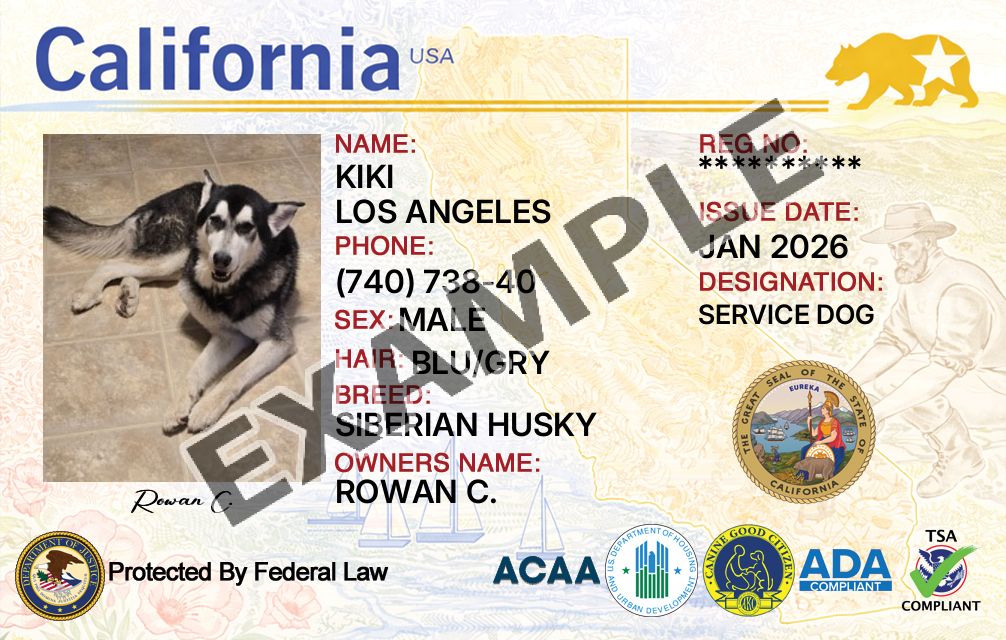
Service Dogs and Emotional Support Animals in Lake, California
If you’re asking, “where do I register my dog in Lake County, California for my service dog or emotional support dog,” the key thing to know is that most people are really looking for two different processes: (1) a local dog license in Lake County, California (a county or city requirement tied to rabies vaccination), and (2) understanding the legal status of a service dog or an emotional support animal (ESA). This page explains both—clearly and locally—so you can handle licensing and documentation the right way.
Where to Register or License Your Dog in Lake County, California
The official agency for county animal services and in-person licensing in Lake County is listed below. If you live in an incorporated city, your city may have additional requirements or may handle enforcement differently. When in doubt, start with the county office below and confirm whether your address is in an area licensed through the county or through a city program.
Lake County Animal Care & Control
| Phone Hours | Monday–Friday, 8:00 AM–5:00 PM |
| Office Hours | Monday–Friday, 11:00 AM–5:00 PM; Saturday, 11:00 AM–3:00 PM |
| Kennel Hours | Monday–Friday, 11:00 AM–4:00 PM; Saturday, 11:00 AM–3:00 PM |
Overview of Dog Licensing in Lake County, California
What “registering your dog” usually means
In Lake County, “registering your dog” typically refers to obtaining a local dog license (sometimes called a pet license). Licensing is a local government process that helps connect a dog to an owner and commonly relies on proof of a current rabies vaccination. Even if your dog is a service dog or an emotional support animal, you may still need a local license tag depending on where you live.
County areas vs. incorporated cities
Local rules can vary depending on whether you live in:
- Unincorporated Lake County (generally handled through Lake County Animal Care & Control), or
- An incorporated city within Lake County (some cities may have additional local requirements, licensing practices, or enforcement policies).
If you’re not sure whether your address is within city limits, the safest approach is to call Lake County Animal Care & Control and ask whether your residence should license through the county or through a city program.
Rabies vaccination is commonly required
Dog licensing requirements in California commonly tie licensing to a current rabies vaccination certificate. Practically, this means you should plan to show documentation from your veterinarian before purchasing or renewing a license.
What You Need Before Registering a Dog
Documents and details to gather
While requirements can vary by location and circumstance, many residents should be ready with:
- Rabies vaccination certificate (commonly required for a license)
- Spay/neuter documentation (if applicable and if it affects your license category or fee)
- Your contact information (name, phone number, mailing address)
- Dog details (name, breed/description, color, age, sex)
- Payment method for licensing fees (fees can vary by altered vs. unaltered status and other factors)
Special note for service dogs and working dogs
Some jurisdictions have fee rules or exemptions for certain working dogs. If you believe your dog may qualify for a specific category (including some types of working dog exemptions), confirm directly with Lake County Animal Care & Control before you submit payment so your license is issued correctly.
Steps to Register or License a Dog in Lake County, California
Step-by-step overview
-
Confirm where you should license.
Ask whether your residence is served by Lake County Animal Care & Control (unincorporated areas) or if your city has its own licensing process.
-
Make sure your rabies vaccination is current.
Get a rabies certificate from your veterinarian and keep a copy for your records.
-
Gather supporting documents.
If your dog is spayed/neutered, bring proof if it impacts the license category or fee. Have your ID and contact details ready.
-
Apply and pay through the official local process.
In Lake County, licenses are available in person at the county’s Animal Care & Control office during office hours.
-
Keep the license tag accessible.
After licensing, follow local guidance on displaying the tag (often on the dog’s collar) and store your paperwork where you can quickly find it if needed.
Service Dog Laws in Lake County, California
Service dog status vs. local licensing
A service dog is generally a dog that is individually trained to do work or perform tasks for a person with a disability. That legal status is separate from whether the dog has a local license. In other words:
- Service dog status is about training and tasks related to a disability.
- Dog licensing requirements in Lake County, California are local public-health/animal-control rules (commonly tied to rabies vaccination and identification).
No universal “service dog registration” database
Many people search for “service dog registration,” but in everyday practice there is not one official federal registry you must use to make a dog a service dog. What matters legally is whether the dog is trained to perform qualifying tasks and whether the handler meets the legal definition of disability. Local governments may still require the dog to be licensed like any other dog.
Public access basics (practical expectations)
Service dogs are generally allowed in public places where pets aren’t, but they still must be under control. In practice, you should be prepared to:
- Keep the dog leashed/harnessed unless a leash interferes with the dog’s trained tasks
- Maintain control through voice, signal, or other effective means if not leashed
- Ensure the dog is housebroken and not disruptive
Emotional Support Animal Rules in Lake County, California
ESA status is not the same as a service dog
An emotional support animal (ESA) provides comfort by its presence, but it is not trained to perform specific tasks in the way a service dog is. ESAs are most commonly relevant in housing contexts, not general public access.
Does an ESA need a dog license in Lake County?
Often, yes. ESA status typically does not replace local animal control rules. If your dog lives with you in Lake County, you may still need to follow local licensing rules (including rabies vaccination requirements) the same way any other dog owner would.
What documentation is usually involved (housing context)
In housing-related situations where an ESA accommodation is requested, documentation often focuses on:
- The person’s need for an accommodation related to a disability, and
- That the animal provides support that alleviates at least one identified symptom or effect
This documentation is different from dog licensing. A license is local government compliance; an ESA letter (when appropriate) is typically used for housing accommodations.
Dog License vs. Service Dog vs. Emotional Support Animal (ESA)
The table below separates the three concepts so you can quickly identify what you actually need when you’re trying to figure out where to register a dog in Lake County, California.
| Category | What it is | Typical purpose | Common proof | Public access? |
|---|---|---|---|---|
| Dog License | Local government license/tag for a dog (county/city animal control licensing) | Compliance, identification, and rabies vaccination tracking | Rabies vaccination certificate; owner and dog details; sometimes spay/neuter proof | Not a public-access credential |
| Service Dog | Dog individually trained to perform tasks for a person with a disability | Disability-related assistance through trained work/tasks | Task training and handler’s disability-related need (not a universal registry) | Generally yes, when the dog is under control and meets behavior requirements |
| Emotional Support Animal (ESA) | Animal that provides emotional support by presence (not task-trained like a service dog) | Most often housing-related accommodations | Housing-related documentation supporting an accommodation request (varies by situation) | Typically no general public-access rights like a service dog |
Frequently Asked Questions
Additional Notes for Lake County Residents
Common reasons licensing comes up
- Moving to Lake County: you may need to license after establishing residency.
- New dog in the household: licensing timelines may apply; confirm with the local office.
- Found dog / lost dog: licensing and tags can help reunite pets with owners.
- Vaccination updates: licensing is often linked to rabies vaccination status.
If you need help choosing the right path
If your primary goal is compliance, focus first on the local dog license process. If your primary goal is disability-related accommodation, focus on whether your dog meets the definition of a service dog (trained tasks) or whether an ESA accommodation is relevant (commonly housing). If you’re not sure where your dog fits, the licensing office can still guide you on the dog licensing requirements Lake County, California expects for residents.
Register A Dog In Other California Counties
Select your county below to get started with your dog’s ID card. Requirements and license designs may vary by county, so choose your location to see the correct options and complete your pup’s registration.
- Alameda County Dog Registration
- Alpine County Dog Registration
- Amador County Dog Registration
- Butte County Dog Registration
- Calaveras County Dog Registration
- Colusa County Dog Registration
- Contra Costa County Dog Registration
- Del Norte County Dog Registration
- El Dorado County Dog Registration
- Glenn County Dog Registration
- Humboldt County Dog Registration
- Imperial County Dog Registration
- Inyo County Dog Registration
- Kern County Dog Registration
- Kings County Dog Registration
- Lassen County Dog Registration
- Madera County Dog Registration
- Marin County Dog Registration
- Mariposa County Dog Registration
- Mendocino County Dog Registration
- Merced County Dog Registration
- Modoc County Dog Registration
- Mono County Dog Registration
- Monterey County Dog Registration
- Napa County Dog Registration
- Nevada County Dog Registration
- Orange County Dog Registration
- Placer County Dog Registration
- Plumas County Dog Registration
- San Benito County Dog Registration
- San Bernardino County Dog Registration
- San Joaquin County Dog Registration
- San Luis Obispo County Dog Registration
- San Mateo County Dog Registration
- Santa Barbara County Dog Registration
- Santa Clara County Dog Registration
- Santa Cruz County Dog Registration
- Shasta County Dog Registration
- Sierra County Dog Registration
- Siskiyou County Dog Registration
- Solano County Dog Registration
- Sonoma County Dog Registration
- Stanislaus County Dog Registration
- Sutter County Dog Registration
- Tehama County Dog Registration
- Trinity County Dog Registration
- Tulare County Dog Registration
- Tuolumne County Dog Registration
- Ventura County Dog Registration
- Yolo County Dog Registration
- Yuba County Dog Registration